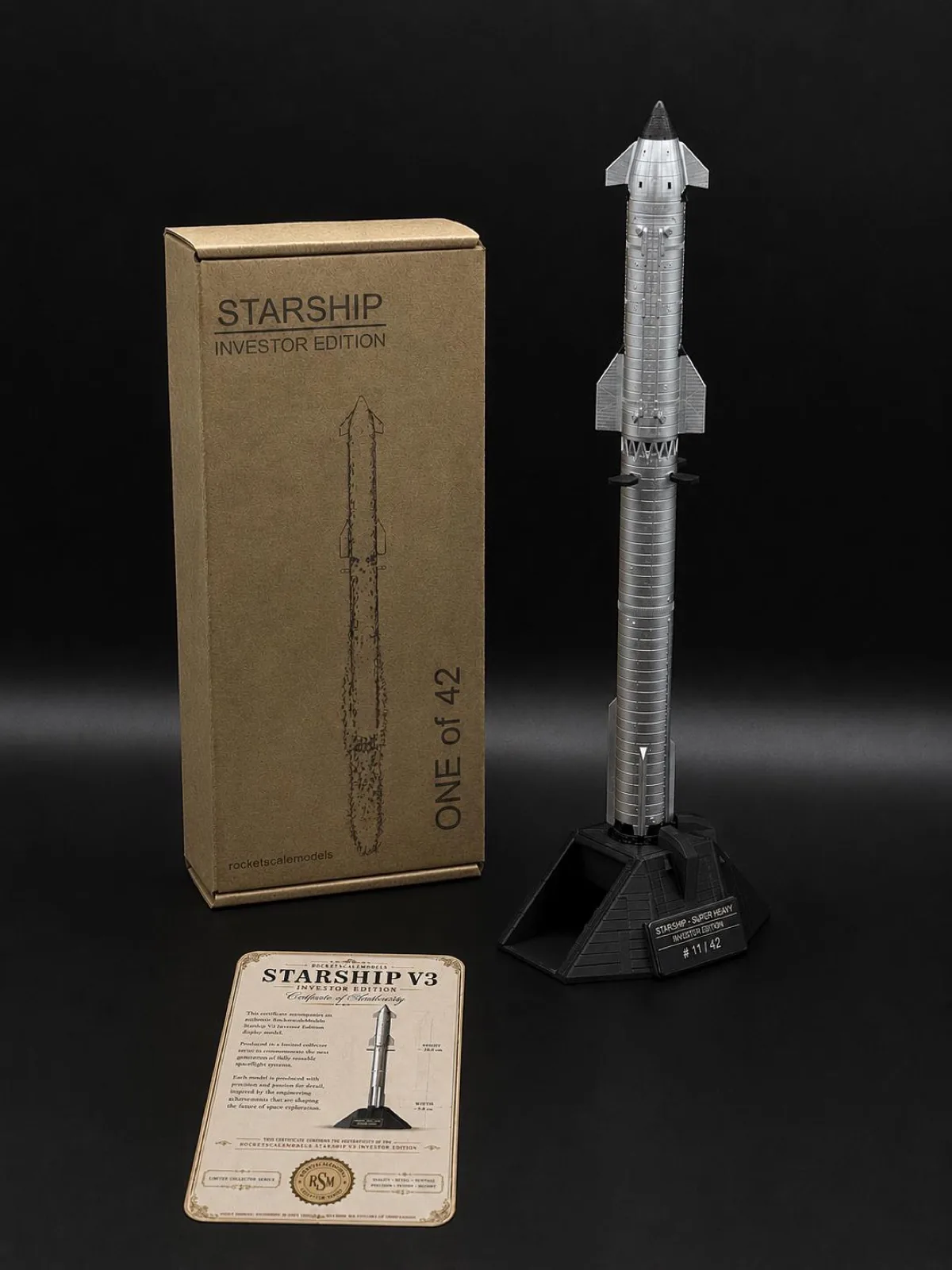
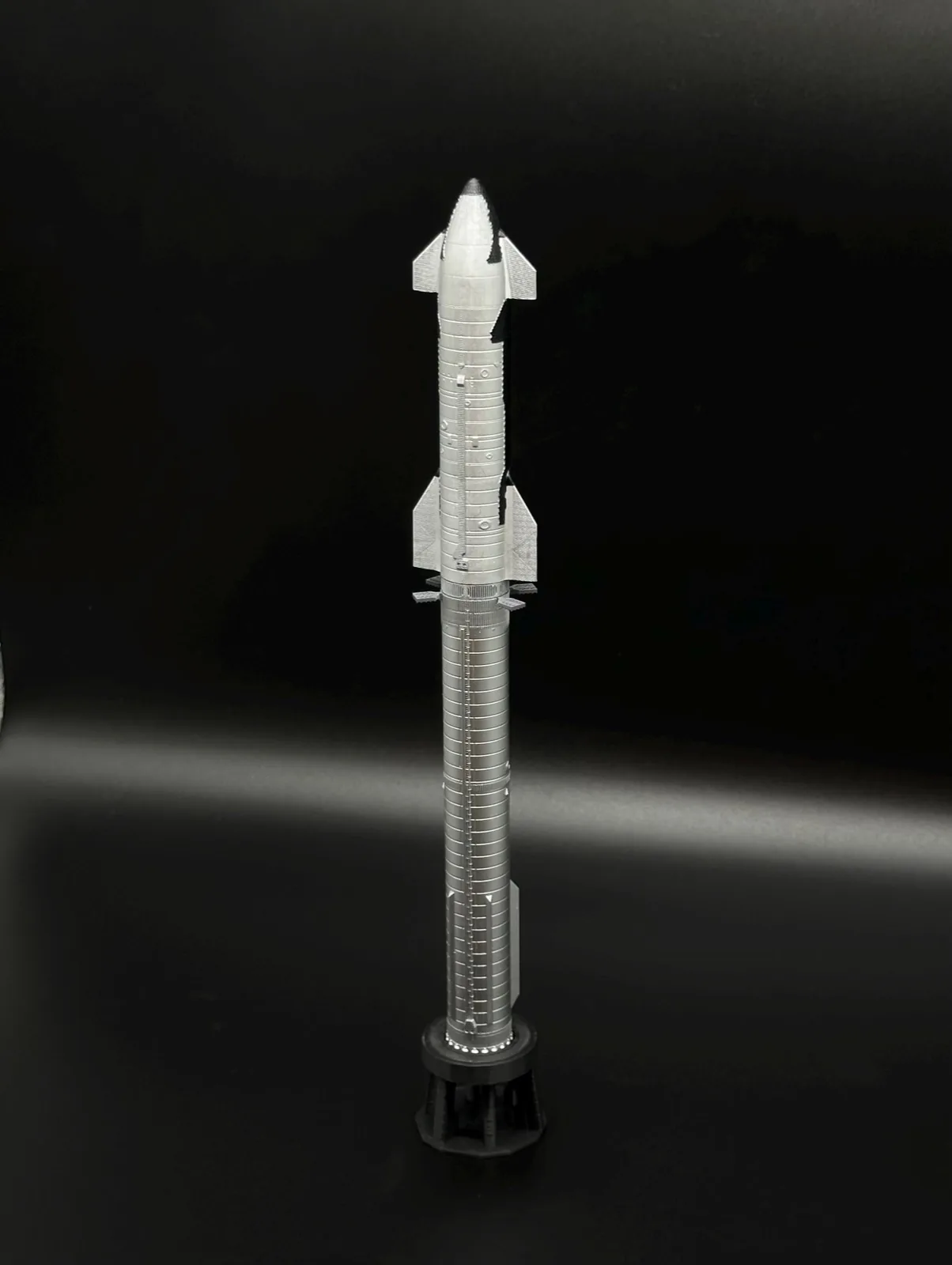
Key facts
By the
numbers.
| Built by | Avio (Italy) |
|---|---|
| Height | 34.8 m |
| Diameter | 3.4 m |
| Mass | 210 t |
| Stages | P120C · Zefiro 40 · Zefiro 9 · AVUM+ |
| Payload | 2.3 t to 700 km polar orbit |
| First flight | 13 July 2022 |


The Real Rocket
Vega C is the successor to Europe’s Vega rocket: 34.8 m tall, with about 60 % more payload capacity. Its P120C first stage is the same solid motor that serves as a booster on Ariane 6. It first flew on 13 July 2022, failed on its second flight and returned to flight on 5 December 2024.
Facts checked October 2026 · sources below
Key facts
| Built by | Avio (Italy) |
|---|---|
| Height | 34.8 m |
| Diameter | 3.4 m |
| Mass | 210 t |
| Stages | P120C · Zefiro 40 · Zefiro 9 · AVUM+ |
| Payload | 2.3 t to 700 km polar orbit |
| First flight | 13 July 2022 |
Launches
Maiden flight with LARES 2 and six small satellites.
Failure: the Zefiro 40 second stage lost pressure due to nozzle erosion; two Pléiades Neo satellites were lost.
Return to flight with Copernicus Sentinel-1C.
ESA’s Biomass forest-mapping satellite.
The SMILE space-weather mission of ESA and the Chinese Academy of Sciences.
Records & firsts
FAQ
34.8 metres, with a diameter of 3.4 metres.
Vega C is taller and wider, uses the larger P120C and Zefiro 40 motors and carries about 60 % more payload.
Nozzle erosion on the Zefiro 40 second stage caused a loss of pressure on flight VV22.
Since 2024 Avio markets Vega C directly, instead of Arianespace.
Sources
The past
Custom models & B2B